Goddammit. I feel like October flew by, even though at the end of September I promised not to let it slip. Maybe, though, it’s just a feeling caused by my getting carried away by a never-ending stream of things I want to do, paired with my chronic lack of structured focus.
That’s why I keep writing these monthly notes. It forces me to keep track of things and reflect on what I did. And, you know, October wasn’t so bad. Sure, I had only one D&D session. But my brother graduated, the Volley Superlega was back on schedule (and Cisterna won a fantastic match), there was my father’s birthday, we went to a nice restaurant, and there were some other personal things. (And technically, as I’m writing, October is not over yet, since I still need to attend the Halloween party.)
Maybe this feeling is caused by my lack of progress on personal projects I deemed important. I failed to complete a blog article I wanted to write. The novel revision is going steadily (and that’s great) but not as fast as I wanted, and some other coding projects are on hold, collecting dust. Was I expecting too much from myself? If I look around, I don’t think so. Expectation vs. reality. It is always the same problem.
But let’s move on! In October, I read five books, practiced with competitive memory techniques, continued my Hitchcock marathon, listened to 30 new music albums, and played Control Resonant. Let’s see how it went!
Housekeeping
As in September, I don’t have any housekeeping for my blog. That’s preposterous. I will send myself a warning. Bad me!
Reading


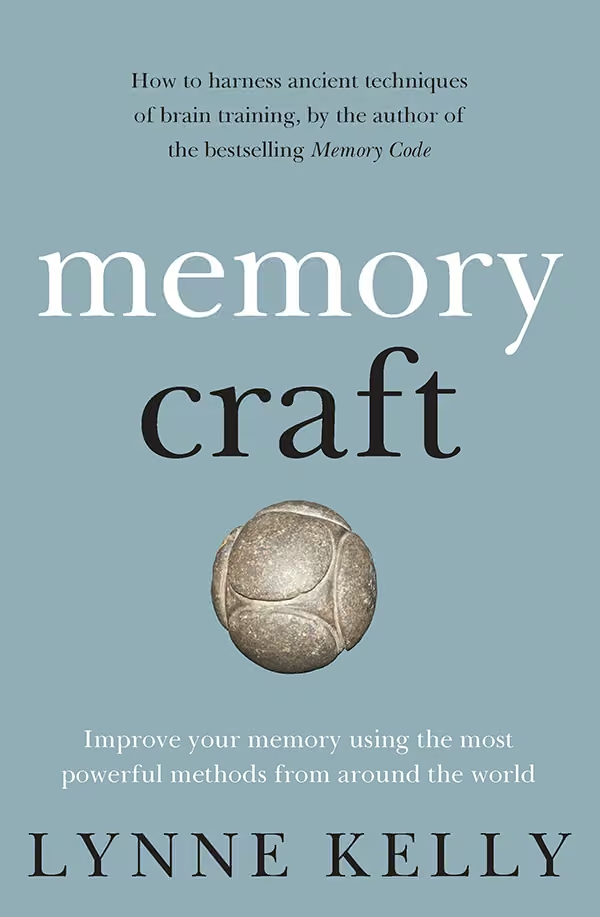


October has been a prolific month for reading! Which is probably why I did very little else (see next section). We got a Japanese mystery book and four non-fiction books. Let’s go over them.
- Africana Philosophy by Peter Adamson and Chike Jeffers. This is Volume 7 of my beloved History of Philosophy Without Any Gaps series. This time, the authors explore Africana philosophy from prehistoric Africa, to Egypt, to West African Muslim kingdoms, up to the 19th-century thinkers of the African diaspora. It covers a lot of ground but, as you can imagine, it gives a lot of space to the problem of slavery. A strong volume that goes into detail on a world that is often ignored (especially here in Italy).
- Moonwalking with Einstein by Joshua Foer. Foer was a science and travel journalist who got curious about memory competitions in 2005. He was fascinated by the feats of memory athletes who could memorize an entire deck of cards in minutes and accomplish other seemingly superhuman memory challenges. Surely, he thought, you needed innate talent. Then, one of the competitors dared him to try: after all, memory techniques could be learned by anyone. Though he was skeptical, he tried. A year later, he won the USA Memory Championship, setting the U.S. record for memorizing a 52-card deck in 1 minute and 40 seconds. This book covers the basic techniques used by memory athletes and what memory is, and it also explains his journey from noob to champion. A fascinating and inspiring story.
- Memory Craft by Lynne Kelly. I read this right after Moonwalking with Einstein and I wanted something that went into more detail on memory techniques and their history. Memory Craft does that, in theory. In reality, it doesn’t add very much. There are more examples, and Lynne Kelly is a fun and enthusiastic writer. But there was nothing really to add to my toolbox, and there were a lot of digressions. It is a solid book, but not what I was looking for.
- Refuse to Be Done by Matt Bell. Because I am revising my novel, I like to read revision books. They help me stay on track with what I want to do. However, Refuse to Be Done is a pretty middle-of-the-pack writing book. There are some interesting bits, but for the most part, it’s a repackaging of techniques popularized by others. It is interesting to know how Matt Bell works (I am always curious about other writers’ workflows). But unless this is your first writing book ever, there is nothing new to add to your workflow.
- Strani Disegni (Strange Pictures) by Uketsu. This is the Italian version of 変な絵, a book written by Uketsu, a peculiar Japanese author who never shows their face and always appears in videos wearing a white mask. The book ties together seemingly unrelated stories that share different drawings as their starting points. The story is nice, and it is interesting how the author also uses diagrams and drawings within the prose to tell the story. But I wasn’t particularly impressed. I also found some plot points to be a bit too convenient.
Watchlist
Anni Difficili (1948) (Difficult Years)
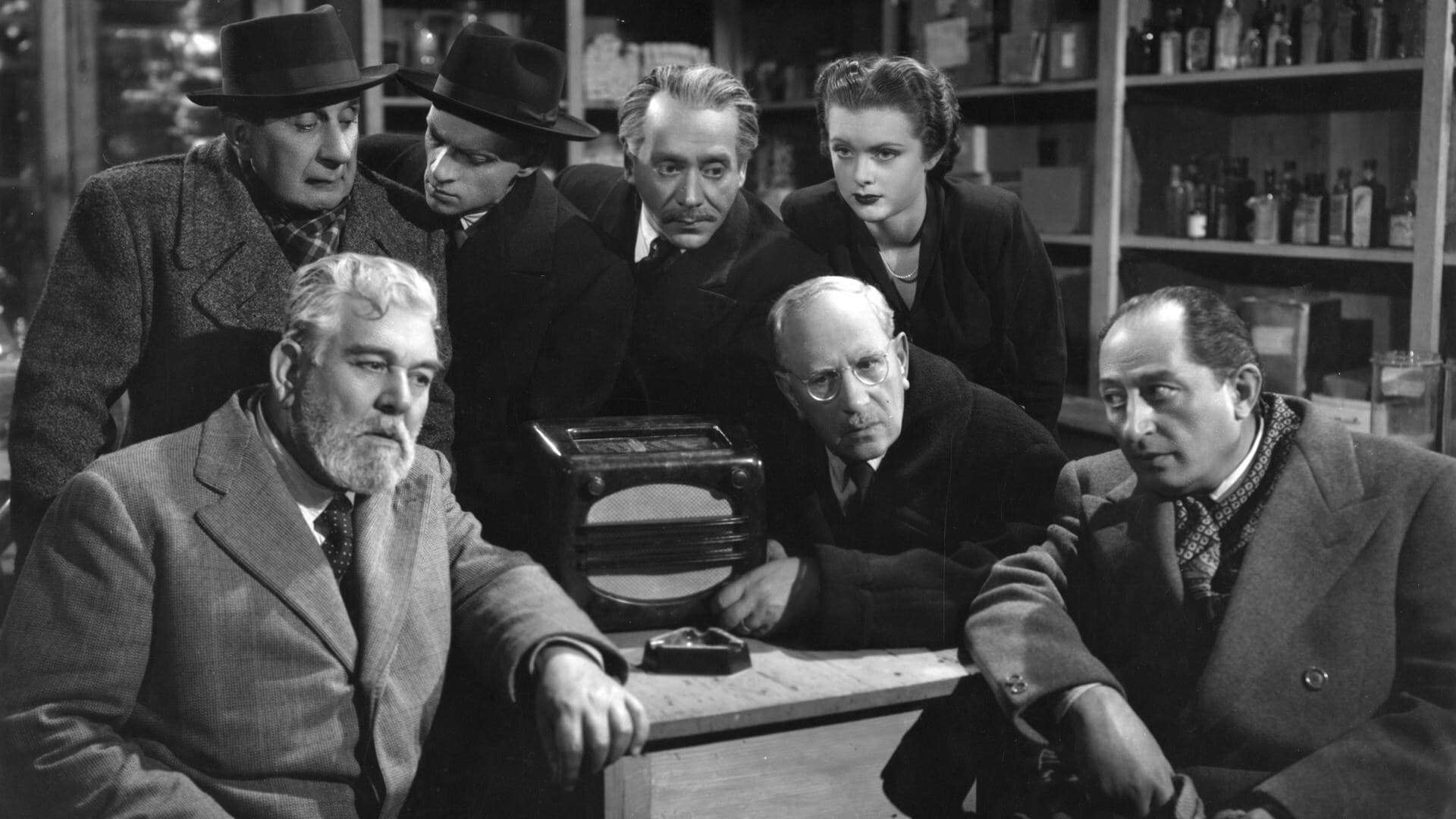
After World War II (and during its final years), there was a vast production of Italian movies describing people’s struggles during those years (we already talked about Rossellini’s Roma città aperta, for instance). But few movies capture the full spectrum of the Italian people of the time like Luigi Zampa’s Anni difficili.
What makes this different is that while it depicts – like many others – the pain, loss, and heroism of the common people, it does not shy away from depicting hypocrisy, cowardice, self-interest, bloodthirstiness, and susceptibility to propaganda. And yet, it maintains a good dose of humor.
The arc of the main character, Aldo Piscitello, a minor town clerk, is emblematic. At the beginning of the movie, in 1934, he is forced by the podestà (what mayors were called under Fascism) to join the Fascist Party to keep his job. His wife, Rosina, and his daughter support the move, and they go overboard, even backdating his enrollment to 1921 to give him the status of Squadrista. Aldo reluctantly accepts. At the end of the movie, in a liberated Italy, the same podestà – now a mayor and claiming to have always been anti-fascist – fires Piscitello with the accusation of being a Squadrista.
In 1948, after this movie won a prize at the Venice Film Festival for outstanding technical quality, many in Italy wanted the film to be banned because it was offensive to the Italian population. A parliamentary interpellation called for the film to be physically destroyed. Now, almost 80 years later, I think very few movies accurately describe Italians like this one. It was true then, and it is true now.
Shadow of a Doubt (1943)
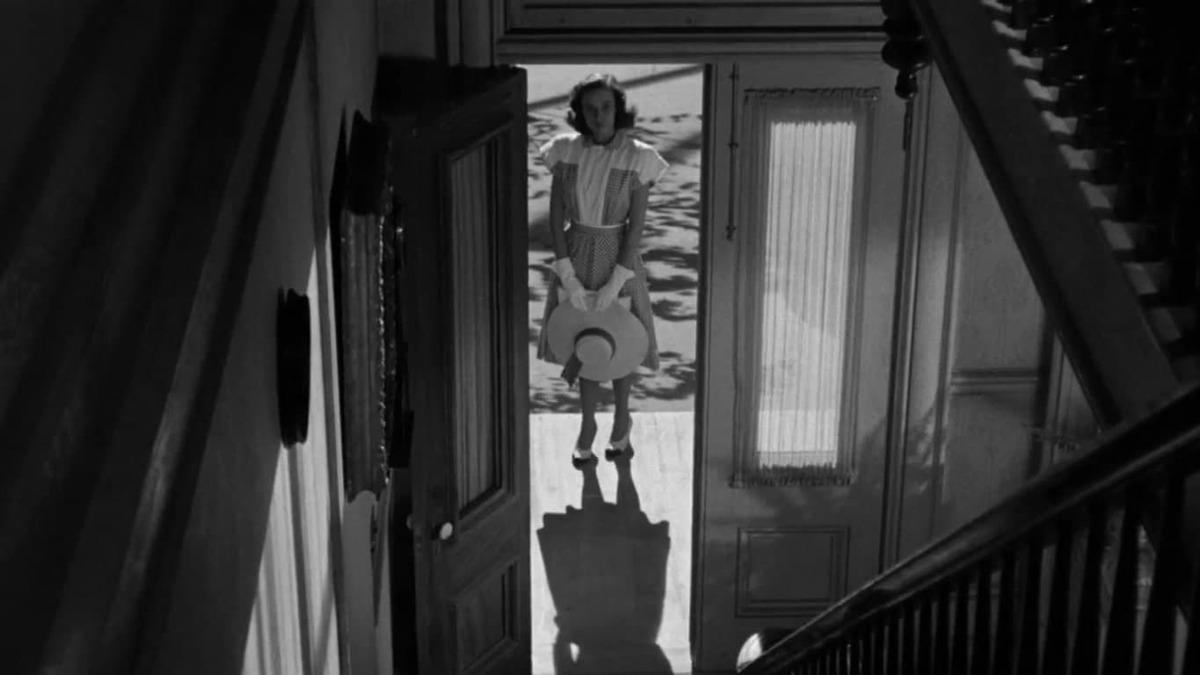
Shadow of a Doubt is Hitchcock’s own favorite movie and the one he enjoyed the most while making it. And we can see why. This movie checks all the director’s trademarks: great camera work, a small town, an apparently normal family, humor, mystery, and murder.
The plot is simple. In Santa Rosa, a restless young Charlie is happy that her Uncle Charlie is coming from Newark, New Jersey (yes, the uncle is also called Charlie). Soon, though, she starts to suspect that her elusive uncle may be hiding a terrible secret and that her family is now in danger.
While I am not really enamored with the story, I loved all the rest. The camera, as in later Hitchcock movies, does most of the storytelling. Notice how Hitchcock creates tension in mundane domestic environments such as a garage, a dinner table or the stairs (in the picture above). You could even say there is not much plot. Nevertheless, you get carried away by the way both Charlies evolve during the movie.
All the Rest
I watched surprisingly few movies in October, so “all the rest” is now “the other three.” All three are Hitchcock movies for the ongoing marathon. Another curious thing is that in October 2026 I only saw movies made in the 1940s. Wow.
- Mr. & Mrs. Smith (1941) – This is an underwhelming Hitchcock attempt at a romantic comedy. The actors are stiff, and the story is cringeworthy.
- Suspicion (1941) – A very good movie with fantastic performances by Cary Grant and Joan Fontaine (she won the Oscar for Best Actress). My only complaint is that they forced Hitchcock to change the ending. But we know the truth.
- Saboteur (1942) – There are some very good scenes here, especially the one on the Statue of Liberty. Crazy staging, especially for the time. The rest is forgettable.
In October we also watched the last episodes of Ted Lasso season 4. I don’t know. Not terrible, but I have the impression that they wanted to cram the plot beats of 2 seasons into one. It never leaves you the space to absorb something before it throws another 5 things at you. And many subplots start and then end in nothing.
Music

The Tangent is a British progressive rock band formed in 2002 and led by singer and keyboardist Andy Tillison. There are other people, too, as you’d expect in a band, but they come and go. Tillison is the band.
Like all good things, it was meant to be a one-off and ended up with 14 studio albums, the last of which came out this October.

Was (that’s the name of the album) is a majestic 100-minute album with a very classic prog-rock sound, and yet it doesn’t feel too derivative. The album is split into two parts. The first is a more classic progressive rock work, while the second part is made up of instrumentals (except for the last track, for some reason). The only issue with this work is that there is no way to listen to it legally without buying it. But I know you’ll find a way.
Overall, October has been a good month for music, even if almost no album has stolen my heart so far. Other notable mentions:
- Dopamine Chamber by Fontaines D.C. In my ranking, it is better than Romance but far below the unreachable Skinty Fia.
- Return to the Red Planet by Rick Wakeman. Another classic-sounding prog-rock work.
- Autosmile by @ (yes, an ungooglable artist name). A weird psychedelic folk/singer-songwriter album.
- Dja Dja by Marina Herlop. An avant-garde electronic album.
- No Bad Memories by The Avalanches is an electronic musical collage that mixes tracks with old TV commercial bits, nostalgic jingles and forgotten audio logos.
- Doomed Lovers by Twin Temple. I guess you didn’t know there was a duo that, in 2026, makes satanic doo-wop. If you want very ’50s soul music that talks about death, blood and devils, they have you covered.
I’m probably forgetting something that I’ll end up loving next. But that’s life. There is too much music every month. :D
Gaming

Control (2019) was one of my favorite games ever. The gameplay is pretty standard, but the game was able to evoke incredible feelings. It was able to blend horror, the uneasiness of liminal spaces, and quite a bit of funny silliness.
Control Resonant fails to replicate that and falls way below the original. The game moves to a kind of “open world” scenario where big chunks of Manhattan are now crushed between two supernatural forces: the Hiss and the Patterning. And the Mold. Of course.
Unfortunately, this falls into one of my usual complaints: Density of Interest. The first game was contained in a single building (with a caveat), and you slowly explored it. The space is limited, and there are a lot of interesting and amusing things to discover. That is: high density. On the other hand, Control Resonant has roughly the same content (probably less) dispersed into a larger area, mostly uninteresting and repetitive. That is: low density.
Moreover, the dialogue is more annoying and uninspired, the story is less intricate, and I didn’t feel as amused as I did in the first game, with the motel, the janitor, all the funny AWEs, and more. Resonant feels much emptier.
The game gets much better in the second half, exactly when the game stops its open-world effort and adopts a narrower and on-rails narrative. The final two areas are actually cool to explore and are the closest I got to the feeling of the original game.
Also, Dylan Faden (Jesse’s younger brother and first Hiss host) is a cool character to explore. Dylan suffered enough. He doesn’t deserve my mixed review.
Other Interesting Things
- 🥔 Atpota.to – Dame is a wonderful human being. They created some of the best websites of the ATmosphere (the Bluesky protocol, for the uninitiated). Atpotato is a cute little website to keep track of what’s new in the ATmosphere, plant flowers in a garden, and pet a potato.
- 🌀 Atmosphere For You – Speaking of the ATmosphere, if you want a feed that doesn’t look only at Bluesky posts but also at all the other stuff (books, movies, events, code, and more), this is the webpage for you.
- 😃 FrankMoji – This is a custom set of emojis with a very unique style. There is also a browser extension that replaces your OS emojis with the FrankMoji version.
- 📝 Introducing tsrs: a Port of TypeScript to Rust – Cloudflare released a version of TypeScript in Rust. What a time to be alive.
- 🎮 Destroy Any Website – Load any website and… destroy it. It is a very fun game (demo?) where you can blast holes in any website. It is easier to check it out than to explain it.
- 📁 Tiny Little Office – This is a great concept: a small office suite that works in your browser and saves your documents… in the URL itself. 😃
Conclusions
And we are now in November! The month between sweet October and the holiday season. I don’t have a lot planned for November other than that I need to start working on some tasks for the wedding. I fear I will get bombarded with a billion tasks that I’m underestimating. After all, the wedding is only six months away.
I’d better stop wasting time, then.
See you next month! ❤️